Real Estate Education
Should You Hire a Local Realtor When Relocating to Florida? An Honest Answer.
Ben Cote • August 22, 2026
Do you need a local agent to buy a home in Florida from out of state — or a new build? An honest answer from a realtor who relocated his own family: the costly mistakes to avoid and why representation matters even with builders.
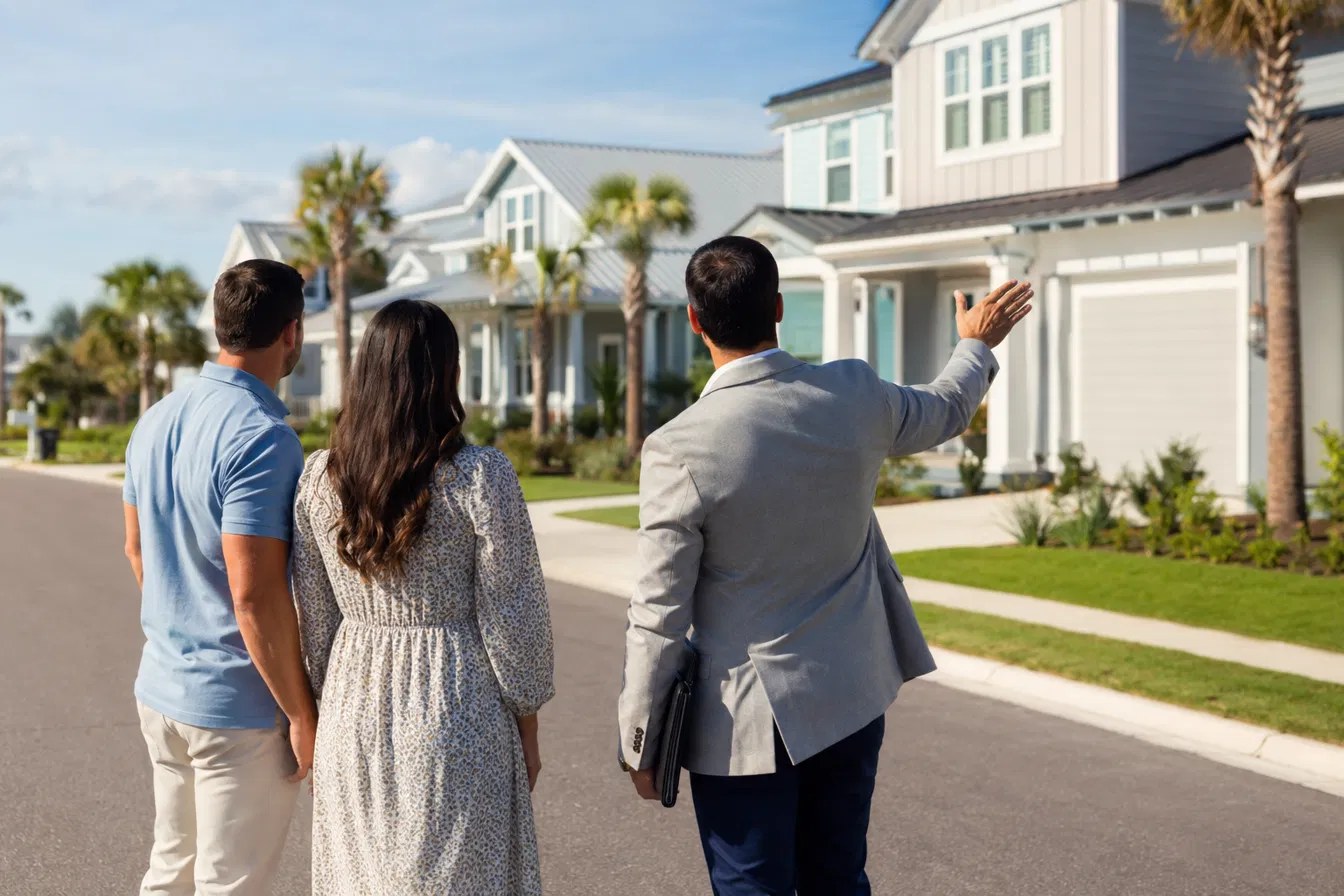
Should You Hire a Local Realtor When Relocating to Florida? An Honest Answer.
By Ben Cote | NE Florida Realtor | eXp Realty
What You'll Learn From This Post
- Whether you actually need a local agent when buying from out of state
- The single most expensive mistake out-of-state buyers make
- What a local agent does that Zillow and a listing agent can't
- Why new construction is where representation matters even more
- How buyer representation changed in 2024 — and why it matters for you
- What to actually look for in a relocation agent
If you're planning a move to Florida from out of state, you've probably wondered whether you really need a local real estate agent — or whether you can just find the house online, call the number on the listing, and figure out the rest.
It's a fair question. So here's an honest answer, from someone who relocated his own family across the country and now helps other families do the same.
You don't legally need an agent to buy a house. But buying in an unfamiliar market from a thousand miles away, without local representation, is one of the easier ways to overpay, get blindsided by costs you didn't budget for, or end up in the wrong neighborhood for your life. This is exactly the situation where a good local agent earns their keep — and it costs you far less than most people assume.
Let me walk you through why.
The Most Expensive Mistake Out-of-State Buyers Make
Here's the one that costs people the most, and it happens constantly.
A buyer finds a house they love online. They call the phone number on the listing. That connects them to the listing agent — and they let that agent handle the whole deal.
Here's the problem: the listing agent works for the seller. That's not a knock on them; it's their literal job and legal duty. They have a fiduciary obligation to get the seller the best possible outcome — the highest price, the best terms. When you, the buyer, walk in without your own representation, you're negotiating against a professional who is contractually committed to the other side's interests, with no one committed to yours.
You wouldn't go to court using the other party's lawyer. Buying a home — likely the largest purchase of your life — in an unfamiliar market is no different. You want someone whose job is to represent you.
What a Local Agent Actually Does That You Can't Do From Afar
The value of a local agent isn't pulling up listings — you can do that yourself on any app. The value is everything that isn't on the app. Here's what that looks like in a market like Northeast Florida specifically.
They know what the screen can't show you. Which neighborhoods flood and which don't — and it can vary street to street here. Which school attendance zones are strong, and which are about to change as new schools open in a fast-growing county. What a home actually sold for versus what it's listed at. Whether that quiet street is quiet at 5pm on a Tuesday. None of that is in the listing photos.
They protect you on the stuff that wrecks budgets. In Florida, the details that blow up a purchase are often invisible to an out-of-state buyer — CDD fees that add thousands a year to your tax bill, flood zone designations that change your insurance cost dramatically, roof age that affects whether you can even get insured. A good local agent flags these before you're emotionally attached to a house, not after.
They're your eyes and boots on the ground. When you can't hop in the car to see a property, your agent does live video walkthroughs, drives the neighborhood at different times of day, attends the inspection in person, and gives you honest commentary — not a sales pitch. That real-time, on-the-ground presence is the difference between buying with confidence and buying on faith.
They bring the whole team. Lenders who handle out-of-state transactions, reputable inspectors, title companies, insurance agents who know the local market, contractors. Assembling that team cold from another state is slow and risky. A good agent hands it to you, vetted.
New Construction: Where This Matters Even More
Here's a scenario that plays out constantly with relocating families, because so many people moving to Northeast Florida are drawn to the master-planned communities and their brand-new homes.
You walk into a beautiful model home. A friendly, knowledgeable sales representative greets you, answers every question, and makes the whole thing feel easy. It's natural to assume that person is there to help you.
They are — but they work for the builder. That on-site sales representative has a fiduciary duty to the builder, not to you. Their job is to sell the builder's homes on the builder's terms. Just like a listing agent, they're skilled and personable, and just like a listing agent, they are not your advocate.
This trips people up because new construction feels different from buying a resale home. There's no "other side" visibly across the table, so buyers assume they don't need their own representation. That assumption can be expensive.
Here's what your own agent does in a new-construction purchase:
They negotiate what's actually negotiable. Builders rarely drop the base price, because a discount on the sticker sets a comp that affects every other home in the community. But there's often real room on upgrades, design-center credits, closing-cost contributions, and lot premiums. Knowing where a builder will flex — and where they won't — is local knowledge an out-of-state buyer simply doesn't have.
They read the contract that's written to protect the builder. New construction contracts are the builder's contracts, drafted by the builder's attorneys for the builder's benefit. Completion timelines, what happens if construction runs long, what's actually warrantied, what you're locked into. Someone needs to be reading that with your interests in mind.
They keep the builder's lender honest. Builders frequently offer incentives if you use their preferred lender. Sometimes that's a genuinely good deal — and sometimes the rate is higher and the "incentive" costs you more over time. Your agent helps you actually run that math instead of taking it at face value.
They flag the community-specific costs. CDD fees, HOA rules, lot orientation, which phase you're buying in, how the still-under-construction sections will affect your daily life. In a brand-new community, a lot of this is invisible until you're living it.
And here's the part most people don't realize: in almost all cases, having your own agent on a new-construction purchase costs you nothing extra. The builder has already accounted for agent compensation in their model. But you typically need to bring your agent — or have them register with you — on your first visit. Walk in alone, hand over your information, and you may forfeit your right to independent representation on that purchase. If a master-planned community or new build is even a possibility for you, loop in your agent before you tour the first model, not after.
How Buyer Representation Changed in 2024 — And Why It Matters
There's one important update every relocating buyer should understand, because it's recent and it directly affects you.
Following a national settlement involving the National Association of Realtors in August 2024, the way buyer-agent compensation works changed. Buyers and their agents now agree on the agent's compensation in writing, up front, before the agent starts showing homes. Previously, that compensation was typically advertised through the MLS and handled more behind the scenes.
What this means practically: representation is now something you discuss and agree to openly at the start. In many transactions, the seller still offers to cover the buyer's agent compensation — but it's now an explicit conversation rather than an assumption. The takeaway for you isn't complicated: ask your agent directly what they charge and what it covers before you sign anything. A good agent will walk you through this transparently. It's a fair question and they should welcome it.
Don't let the change scare you off representation. If anything, it makes having a clear, committed advocate on your side more valuable, not less.
Why Relocation Experience Specifically Matters
Not every good local agent is a good relocation agent. They're related, but they're not the same skill.
A relocation move has moving parts a local purchase doesn't. You may be selling a home in another state while buying here — two transactions that have to be timed together across different markets and different rules. You're often making decisions with limited in-person time. You need someone who can run a smooth process remotely, who understands the emotional weight of uprooting a family, and who has actually navigated a long-distance transaction before.
And here's a criterion most people never think to ask about: has the agent actually relocated themselves? There's a difference between an agent who has helped other people move and one who has personally sold a home in one state, bought in another, pulled kids out of school, and started over somewhere new. An agent who has lived it understands the parts that aren't in any textbook — the second-guessing, the logistics, the emotional weight of betting on a place you've barely visited. It's not a requirement. But it's worth asking, because lived experience tends to show up in how they guide you.
When you're vetting an agent, ask directly: How many out-of-state or relocation buyers have you worked with recently? How do you handle showings and communication remotely? Can you walk me through the specific costs I should expect in this market? The answers tell you fast whether they actually do this or just say they do.
The Honest Bottom Line
Could you buy a home in Florida from out of state without a local agent? Technically, yes. People do it. Some of them are fine.
But the ones who struggle — who overpay, who get surprised by insurance costs at closing, who buy in the wrong spot and regret it — are almost always the ones who tried to shortcut the local expertise. In an unfamiliar market, with a major financial decision, made largely from a distance, having someone whose only job is to represent you isn't a luxury. It's the thing that protects you.
I say this as someone who did exactly what you might be about to do. My family relocated to Northeast Florida from a thousand miles away. I know what it's like to research a place from a couch far away, to feel unsure about neighborhoods you've never driven through, to worry about getting it wrong. That experience is the whole reason I do this work the way I do — because I've been on your side of it.
If you're relocating to Northeast Florida and want an honest, no-pressure conversation about your move — the market, the neighborhoods, the real costs, and how the process works from a distance — that's exactly what I'm here for.
👉 thecotecollective.com/relocate
Ben Cote | NE Florida Realtor | eXp Realty | 802.734.2397