Real Estate Education
Florida Amendment 3 Explained for Families Moving to St. Johns County (and Why Dec. 31, 2026 Matters)
Ben Cote • October 14, 2026
What Florida's Amendment 3 would change for St. Johns County homebuyers, why Dec. 31, 2026 matters if you're relocating, and what it won't touch.
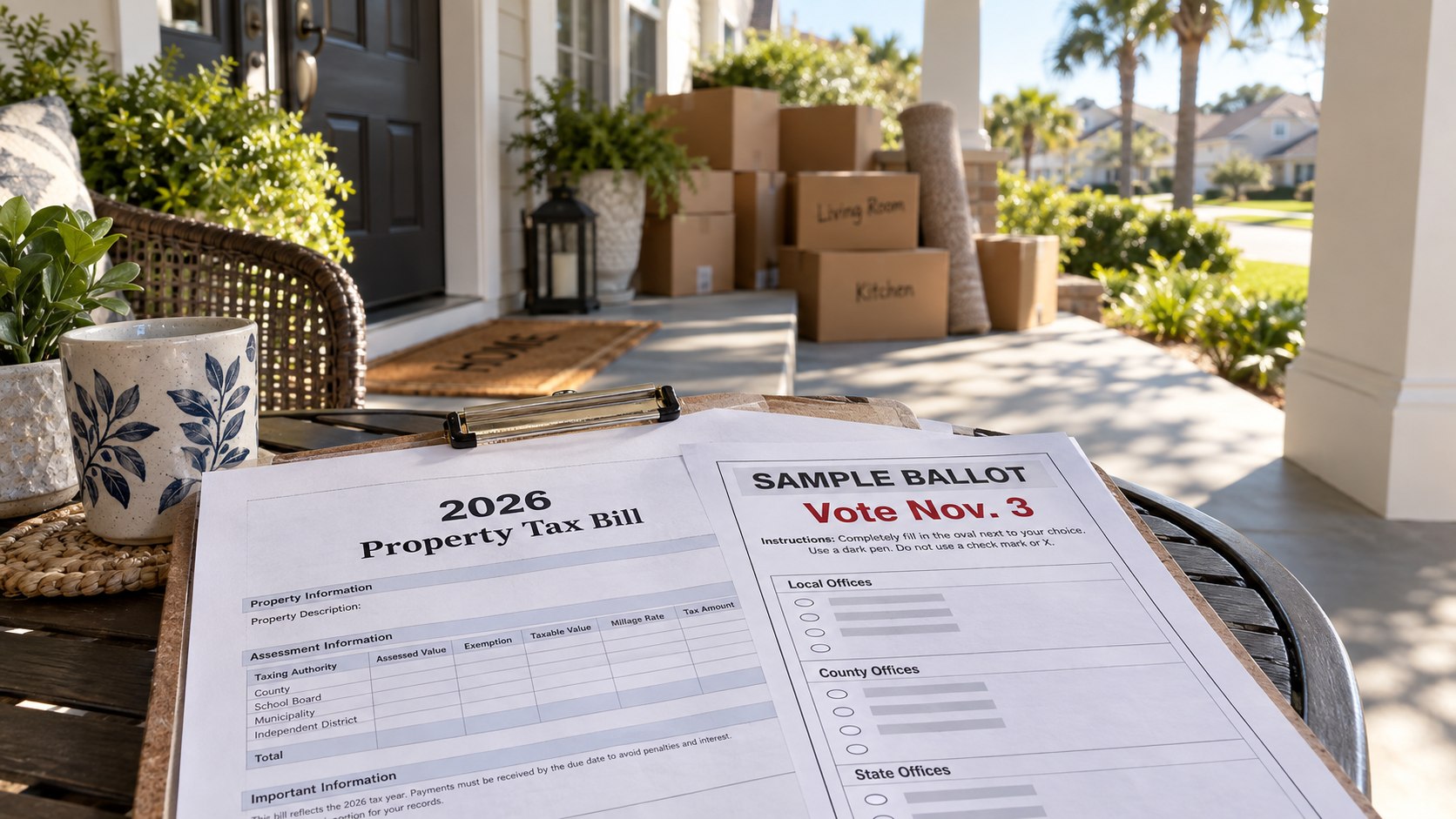
Florida Amendment 3 Explained for Families Moving to St. Johns County
By Ben Cote | NE Florida Realtor | eXp Realty
What You'll Learn From This Post
- What Amendment 3 would actually change — in plain English
- How much it could save a St. Johns County homeowner
- Why December 31, 2026 matters more than the headline numbers if you're relocating
- What it won't touch (CDD, HOA, and school taxes)
- What it means for investors and second-home buyers
- What to do before November 3
Almost every relocation call I've taken in the last month has the same question tucked in somewhere around minute ten: "So what's this property tax thing on the ballot?"
Fair question. When my family moved from Vermont to RiverTown, property taxes were one of the numbers I watched closest, because Northeast buyers are used to tax bills that feel like a second mortgage. Florida's homestead rules were a big part of why the math worked for us.
Now voters will decide on November 3 whether to change those rules. I'm not here to tell you how to vote — that's your call. My job is to make sure you understand what's actually on the ballot, because if you're planning a move to St. Johns County in the next year or two, one date in this amendment could matter more to your family than the headline numbers.
This post is general information, not tax or legal advice.
What Is Amendment 3 in Florida?
Amendment 3 is a proposed change to the Florida Constitution on the November 3, 2026 ballot. Its official title is "Increased Homestead Exemption; Lower Cap on Increases in Non-Homestead Property Assessments." It needs at least 60% of the vote to pass, and if it does, it takes effect January 1, 2027.
Here's what it would do, in plain terms:
Bigger homestead exemption on non-school taxes. Today a Florida homestead gets about $50,000 off its taxable value. Amendment 3 would raise the exemption on non-school taxes to $150,000 in 2027 and $250,000 in 2028, then adjust it for inflation after that.
School taxes don't change. The school-tax portion of the homestead exemption stays at $25,000.
Lower cap for non-homestead property. For rentals, second homes and commercial property, the yearly cap on assessment increases (for non-school taxes) would drop from 10% to 5%.
A different track for new residents. People who are not Florida residents on December 31, 2026 would get the existing homestead exemption when they qualify, with the increased exemption beginning in their fifth year of exemption.
If you remember one bullet, make it that last one.
How Much Would Amendment 3 Actually Save a St. Johns County Homeowner?
At a September town hall, St. Johns County Administrator Joy Andrews walked through two rough examples, as reported by News4Jax:
A homeowner paying about $3,400 in property taxes could pay about $2,700 in 2027. A homeowner paying about $3,500 could pay about $2,100 in 2028.
She was also clear that real savings depend on your home's value, your exemptions and local tax rates — and that the amendment would not eliminate property taxes.
For context, St. Johns County expects about $426 million in property tax revenue in its adopted fiscal 2027 budget, with more than half tied to public safety. The county projects losing about $68.3 million in fiscal 2028 and about $136.1 million in fiscal 2029 if the amendment passes. Statewide, the drop in local property tax revenue has been estimated at up to roughly $12 billion a year once the change is fully phased in.
Yes, the savings for an existing homesteader can be real. Yes, a $250,000 exemption is a big number. Yes, it's on the ballot in three weeks.
Here's what nobody mentions.
What If I Move to Florida After December 31, 2026?
This is the part that matters most for the families I work with, and it's the part I see covered least in local content.
Under the ballot summary, people who are not Florida residents on December 31, 2026 would receive the existing homestead exemption once they qualify — and the increased exemption would begin in their fifth year of exemption. That starting exemption is the current roughly $50,000 on non-school taxes, adjusted for inflation.
So picture two families buying identical houses on the same street in 2027:
Family A became Florida residents before the end of 2026. Family B moved down in spring 2027.
If Amendment 3 passes, Family A would be on the bigger-exemption track when they qualify. Family B would start at roughly today's exemption and reach the full benefit in year five. Same house, same street, different tax bill for the first four years.
A few things worth knowing:
The date is about residency, not your closing date. As written, the line is whether you're a Florida resident on December 31, 2026 — not whether you've bought a house yet. Exactly what proof of residency will count is a question for a tax professional, so don't build a plan around assumptions here.
Starting in 2030, local governments could shorten the wait. A county or city could reduce the five-year requirement by a two-thirds vote if it finds a critical local need.
There's a legal question mark. The ballot language applies the new-resident rule "to the extent permitted by the U.S. Constitution." Treating new residents differently from existing ones may get challenged in court. I wouldn't build your whole moving timeline around a rule that could change.
My honest take: if you were already planning to move around the turn of the year, it's worth a conversation with a tax professional about timing. If you're moving in summer 2027 because that's when school lets out, I wouldn't uproot a school year over this alone. We moved on our kids' timeline, and I'd do it again.
Does Amendment 3 Lower CDD Fees or HOA Dues?
No. This is the one I most want relocating buyers to hear.
The homestead exemption reduces the taxable value used for ad valorem property taxes — the millage-based taxes from the county, school district and similar bodies. CDD assessments and HOA dues aren't calculated that way, so a bigger exemption doesn't shrink them.
In master-planned communities with a CDD, like RiverTown and Nocatee, the CDD line on your tax bill can be a meaningful share of the total. So when someone tells you "Florida property taxes are about to drop," check what part of your bill they're talking about. (I covered CDD fees in detail in an earlier post.)
The same goes for the school portion of your bill. The school exemption stays at $25,000, so the school millage keeps applying the way it does today.
What Does Amendment 3 Mean for Investors and Second-Home Buyers?
If you're buying a rental, a short-term rental or a second home here, you don't get a homestead exemption — before or after Amendment 3.
What would change is the cap. Non-homestead property would see its yearly assessment increase (for non-school taxes) capped at 5% instead of 10%. That limits how fast your assessed value can rise; it doesn't cut your current bill.
Two things that stay the same:
Non-homestead property still pays school taxes on full market value. And when a non-homestead property sells, it's still reassessed at full market value the following January 1 — so your purchase price resets the starting point, cap or no cap.
Could Amendment 3 Change Local Services or Other Costs?
That's the debate, and both sides have a point.
Supporters see real relief for homeowners who've watched their bills climb. County officials, meanwhile, are planning around the possible revenue gap. Andrews said the county may need to "pause or avoid" new long-term commitments until the vote is settled, and that adjusting the millage rate is one option, within limits. The amendment also restricts what county and city property tax revenue can be spent on.
I can't tell you how that plays out, and I'd be skeptical of anyone who says they can. What I can tell you: whichever way the vote goes, I'll walk you through a real tax estimate on any house we look at, using the actual millage, exemptions and CDD line — not a guess.
What Should Relocating Buyers Do Before November 3?
- Don't panic-buy. A ballot measure is a reason to plan, not a reason to rush into the wrong house.
- Write down your residency timeline. When will you actually be a Florida resident? Get a tax pro's read on whether the 12/31/2026 date affects you.
- Look at the whole bill. Ad valorem taxes, CDD, HOA, insurance and flood — the full monthly number is what matters.
- Remember homestead basics still apply. In St. Johns County you generally need to own and occupy the home as your permanent residence as of January 1, and file by March 1.
- Check back after the vote. If it passes, implementation details will follow. If it fails, the current rules stay in place.
If you're still figuring out the bigger picture — schools, commutes, which communities fit — start with my Northeast Florida Relocation Guide. And if you want me to run real numbers on a specific house or community, just reach out. No pressure, just numbers.
Amendment 3 FAQ
When is the vote on Florida Amendment 3? November 3, 2026. It needs at least 60% of the vote to pass and would take effect January 1, 2027.
Does Amendment 3 eliminate property taxes in Florida? No. It raises the homestead exemption on non-school taxes. School taxes, CDD assessments and HOA dues are not eliminated.
I'm moving to St. Johns County in 2027. Do I get the full $250,000 exemption? If it passes, people who weren't Florida residents on December 31, 2026 would start with the existing exemption and get the increased exemption beginning in their fifth year of exemption. Local governments could shorten that after 2030.
Does Amendment 3 help rental property or second-home owners? Not with a homestead exemption. It would lower the annual assessment cap on non-homestead property from 10% to 5% for non-school taxes.
Will Amendment 3 lower my CDD fees in RiverTown or Nocatee? No. CDD assessments are separate from the homestead-exempt property taxes, so they aren't reduced by a bigger exemption.
When would homeowners see the change? If approved, changes would first show up on 2027 TRIM notices (mailed in August) and 2027 tax bills (mailed in November), with the full $250,000 exemption starting in 2028.
This post is general information, not tax or legal advice. Tax rules and ballot measures change — verify current specifics with the St. Johns County Property Appraiser (sjcpa.gov) and a licensed tax professional.
Ben Cote | NE Florida Realtor | eXp Realty | 802.734.2397